You have walked uphill for two hours. The cloud lifts, the summit appears, and you have one camera body and one lens mounted. The other lens is in the pack, and it will stay there unless you decide otherwise.
That decision matters more in the mountains than almost anywhere else, because mountains hand you both extremes in a single view: something enormous a long way off, and something small and close at your feet. A wide-angle and a telephoto do not simply show more or less of the same scene. They tell different stories about the same ridge.
The Same Ridge, Two Frames
Picture a granite peak across a shallow alpine basin. A tarn in front of you, a scatter of boulders, a scree slope rising to the left. It is a scene that photographs badly with the wrong lens and beautifully with either of the right ones.
At 24mm, standing at the water's edge, the peak sits small in the upper third of the frame. The boulders in the foreground become the subject; the tarn pulls the eye backward; the sky takes half the picture. Shift two steps to the left and the composition falls apart. A wide lens is ruthless about where you stand.
At 200mm, from the same spot, the boulders disappear. The summit fills the frame, and behind it a second ridge appears that you could not properly see before, then a third. The face gains texture — gullies, snow patches, the dark line of a couloir. Nothing changed except the crop and where you pointed it, and the photograph now says something else entirely. Not I was here, but look at the shape of that thing.
What a Wide-Angle Lens Does to a Mountain
Wide lenses earn their place by including. A 16–35mm lets you stand in the stream, put a wet rock a metre from the front element, and still hold the summit in frame. That near-far pairing is what people mean when they talk about scale in landscape photography. The mountain does not get bigger; the foreground gives the eye something to measure it against.
There are two habits worth building. First, get low and get close. A wide-angle shot taken at eye height from a car park is a wide-angle shot of a car park. Kneel, find a rock, a rivulet, a line of frost, and let it occupy the bottom third. Second, level the horizon and think about tilt. Every degree you lean the camera back sends the verticals of the mountain running outward, and in a scene with trees or hut walls that lean becomes obvious.
Also mind the sky. A wide lens gives you a great deal of it, and a great deal of flat grey or blown white will sink an otherwise good frame. Decide what the sky is doing before you press the shutter. If it is doing nothing, crop it out with your feet — walk forward, find higher ground, point down.
One practical annoyance: a polarising filter behaves unevenly across a very wide field of view, and on clear days at high altitude the sky can go from deep blue on one side of the frame to pale on the other. Rotate gently, and accept a slightly weaker effect for an even one.
What a Telephoto Lens Does: Compression and Layers
Compression is not a trick inside the lens. It comes from distance. When you photograph a mountain from two kilometres away, the ridge behind it and the ridge behind that are almost equally far from you, so they render at similar sizes and appear pressed together. At 300mm the ridgelines become horizontal bands, each paler than the one in front of it, and the haze that ruins a wide shot becomes the whole point of the picture.
Telephotos also isolate. A single lit summit against shadowed cloud, a snow plume blowing off a col, the zigzag of a path cut into a slope — these are frames a wide lens cannot make without a heavy crop. For weather especially, a long lens is the better tool: the shaft of light hitting one valley wall is a small event inside a very large scene.
The costs are real. Long focal lengths magnify camera movement, so bring a tripod or keep shutter speeds comfortably fast. Midday heat shimmer softens distant peaks in a way no lens can fix, which is one more argument for early starts. And a telephoto gives you almost no context, so each frame has to stand on shape, light and colour rather than on location.
A wide lens does not add depth. It adds room for a foreground. If you don't put something in that room, you get a smaller mountain and more sky.
Depth Comes From Layers, Not Focal Length
This is the idea that quietly undoes a lot of mountain photography. Wide-angle lenses are sold as the depth lens, and they are — but only when the scene has separate planes stacked in front of the camera. Photograph a flat rock wall at 20mm and it looks as flat as it did without the camera.
A telephoto can build just as much depth by stacking. Foreground ridge, middle ridge, far ridge, sky: four planes at 200mm read as a deeper image than two planes at 20mm. What actually creates depth is overlap, tonal separation and atmosphere. Choose the focal length that lets you arrange those planes, not the one that claims to be wider.
Remember too that changing focal length mostly changes the crop. Changing where you stand changes the picture. Before you swap lenses, walk twenty metres and see whether the scene reorganises itself.
Three Situations, Side by Side
- The tarn with the reflection. Wide, almost every time. You need the water as a leading surface and the peak small enough to sit inside it. Around 20–28mm, camera low, reflection filling the lower half. Switch to 150mm and you get the summit and a strip of water, which is a fine detail frame but no longer a picture about the lake.
- Sunrise ridgelines in layers. Telephoto. Stand still and work between 100mm and 400mm as the light moves down the valleys. Each change of focal length recomposes the bands of haze. A wide shot here usually contains four mediocre pictures inside one busy one.
- Weather moving across a valley. Start long. Isolate the lit wall, the rain shaft, the edge of the shadow. Once the system is overhead and the light has gone flat, swap to wide and use the foreground you have been ignoring.
A Working Method: Shoot It Twice
- Make the wide frame first, while your legs are fresh and the foreground is obvious. Find the anchor object and commit to it.
- Look at what turned small in the back of the frame. That distant summit or notch is your next photograph.
- Swap to the telephoto and hunt for three overlapping planes — near ridge, middle ridge, far peak. Adjust focal length until the gaps between them look right.
- Check the edges in both frames. Wide shots suffer from clutter at the corners; long shots suffer from a bright patch of sky intruding at the top.
- Note the time. If the light is still improving, repeat both frames in twenty minutes rather than leaving with one version.
So Which Lens Goes in the Pack?
If you carry one lens into the hills, make it a mid-range zoom that leans wide — something in the 24–105mm region covers the majority of mountain scenes and keeps the bag honest on a long ascent. Weight is not a detail at altitude; a lens you resent carrying is a lens you stop using.
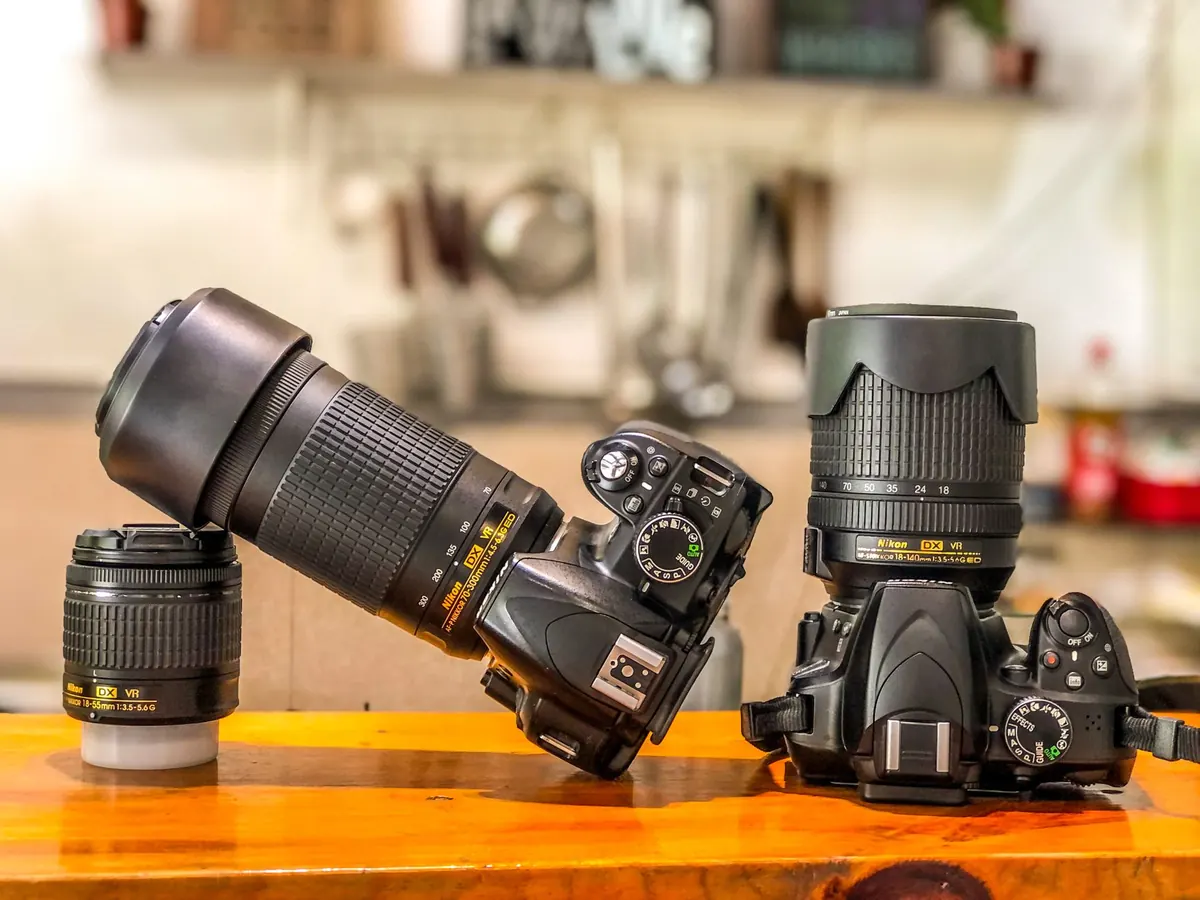
If you carry two, the most flexible pairing is a wide zoom and a 70–200mm, or a 100–400mm if you already own one and the walk is not brutal. The wide zoom handles place, foreground and sky. The longer lens handles shape, light and distance. Between them you can photograph almost any mountain scene twice, in two different languages.
If you are choosing a single focal length for a day, let the terrain decide. Big open basins, lakes, boulder fields and foregrounds you can walk into: go wide. Layered ridges, deep valleys, faces you cannot approach, wildlife and weather: go long. And notice that your phone is already wide. That is the view everyone comes home with. The long lens is usually the one that shows people something they did not see from the trail.
Whatever you decide, spend ten minutes shooting the same scene both ways before you move on. The comparison teaches you more about your own eye than any review of either lens ever will.
Photo: Jayr / Pexels